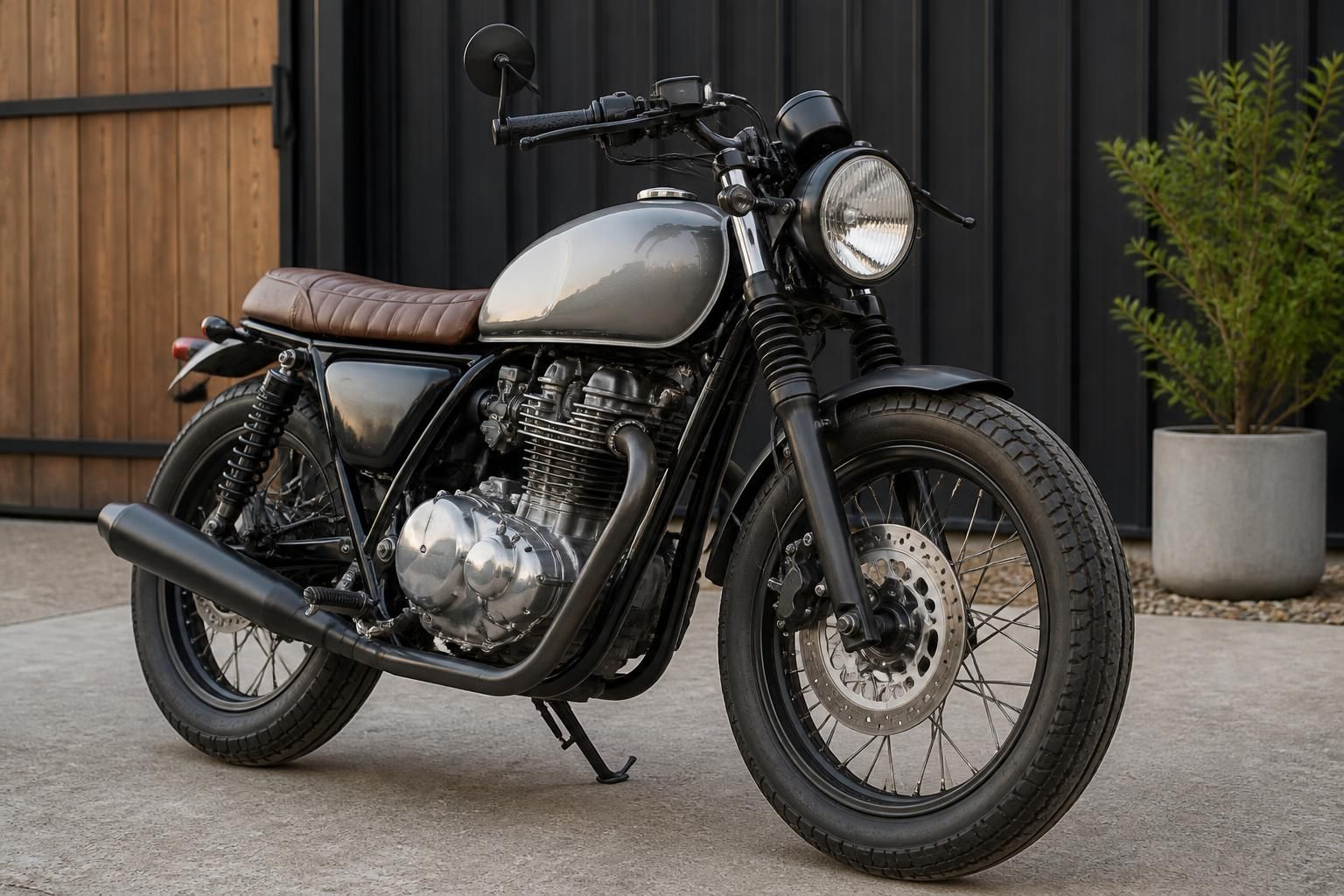
Sell Non-Running Motorcycle
Share the make, model, year and condition of your motorcycle. We Buy Motorcycles reviews enquiries and discusses terms and collection if agreed.
Request a Motorcycle Offer
Share the make, model, year and condition of your motorcycle. We Buy Motorcycles reviews enquiries and discusses terms and collection if agreed.
 Honda
Honda Yamaha
 Suzuki
 Kawasaki
 BMW
BMW Ducati
 A motorcycle that will not start, has a flat battery, missing parts, or sits untouched for months can turn into a lingering problem. If it is taking up space at home, in a garage, or at a storage spot across our Australian service areas, the next step is simple: send through the details and ask for an assessment.
cash for motorcycles reviews non-running bikes by make, model, year, condition, and location, then discusses purchase terms and collection if both sides agree. You do not need to get the bike running first. A clear description and a few photos are often enough to start the conversation.
We regularly look at motorcycles that have mechanical faults, crash damage, electrical issues, or long periods of inactivity. A bike does not need to be rideable for us to consider it. What matters is the real condition, what is missing, and where it is located.
When you contact cash for motorcycles, keep the description practical. Note whether the engine turns over, whether panels are present, whether keys are available, and whether the bike is stored indoors or outdoors. Those details help shape the assessment and the next step.
Each motorcycle is reviewed on its own details rather than on a generic formula. Make, model, year, overall condition, missing parts, and where the bike sits all affect how we discuss a possible purchase. A bike with complete parts may be considered differently from one with major damage or long-term neglect.
We also look at practical factors that affect collection and handling. Tight access, stairs, limited loading space, or a bike that cannot be rolled all matter during the discussion. That is why photos and an honest written description are useful from the start.
These help identify the motorcycle and its general market position.
The build year gives context for age, wear, and parts availability.
Tell us if it is damaged, incomplete, not starting, or stored after long use.
We need to know where the motorcycle is sitting so collection can be discussed.
Clear images of each side, the odometer, missing parts, and visible damage help a lot.
The process is straightforward and suits owners who want to move on from a bike that no longer gets used. You send the motorcycle details, we review the information, and then we discuss whether purchase terms and collection can be arranged. If the bike is suitable, we move ahead with the practical steps.
This is not a one-size-fits-all sale. Non-running motorcycles vary widely, so the discussion stays tied to the actual bike. A complete project bike, a damaged commuter, and a long-stored trail bike all need a different assessment.
Send the make, model, year, condition, and location through the form or by phone.
We review the motorcycle based on the information and photos provided.
If the bike suits our needs, we talk through purchase terms and collection.
When agreed, we plan the collection details and final handover.
We work with motorcycle owners across our Australian service areas who need a simple way to part with a bike that no longer runs. Whether the motorcycle is at home, in storage, or parked at another private location, the discussion begins with the same basics: what the bike is, what condition it is in, and how access works.
If you are in our Australian service areas and have a non-running motorcycle that is taking up room, reach out before spending more time or money trying to sort it yourself. The right assessment starts with the actual bike, not assumptions about it.
Non-running motorcycles are not all the same. A bike that has sat for a while with a dead battery is different from one with seized parts, crash damage, or missing major components. That is why honest detail helps the process move cleanly.
If the motorcycle has been modified, stripped, or partly dismantled, include that too. The more direct the information, the easier it is to discuss whether the bike is a fit for purchase and collection.
Mechanical state: Whether the engine starts, turns over, or has obvious faults.
Completeness: Whether key parts such as fairings, mirrors, wheels, or exhaust pieces are present.
Storage condition: Whether it has been kept indoors, outside, or in long-term storage.
Access: Whether the bike can be reached and moved without difficulty.
If we agree to purchase the motorcycle, we then talk about collection. That conversation depends on the bike itself and the location details you provide. Some motorcycles are easier to handle than others, and access can affect how collection is organised.
There is no need to guess what matters most. Start with the facts, and we will work through the practical steps with you. cash for motorcycles keeps the process focused on the motorcycle, the location, and the condition described.
Many owners contact us about bikes that no longer justify repair. Some are older daily riders, some are project motorcycles that stalled, and some have damage that makes them hard to keep. A non-running motorcycle can still be worth discussing even when it is not suitable for the road.
That includes motorcycles with worn finishes, incomplete bodywork, or faults that have stayed unresolved for too long. What matters is a clear and honest description, not a polished presentation.
Start with the make, model, year, location, and a short note about why the motorcycle is not running.
No. You can contact us with the motorcycle exactly as it sits.
Yes, missing parts can be included in the assessment if you describe what is absent.
Yes, access details help us understand how the motorcycle is positioned and what may be needed for collection.
Send what you have and include a clear written description of the bike’s condition and location.
Yes, project bikes are common as long as the details are clear and accurate.
If you want to sell a non-running motorcycle from our Australian service areas, send the details and let us review the bike as it stands. The process begins with simple information and moves from there if the motorcycle is a fit.
cash for motorcycles is ready to assess the make, model, year, condition, and location, then discuss the next step with you.
Tell us about the bike you want to sell and we will review the details before discussing the next step.