Ever wondered how to turn your motorcycle into cash without leaving money on the table? Selling your motorcycle privately can unlock significantly more value than trading it in at a dealership.
Dealerships typically retain 10% to 50% of a motorcycle’s value during trade-ins. By preparing your bike strategically, you can maximise your selling price and attract serious buyers quickly. Effective motorcycle selling tips involve more than just a quick wash – they require careful planning and attention to detail.
Successful motorcycle valuation isn’t just about the bike’s mechanical condition. Your preparation can potentially increase the sale value by up to 10% with just a weekend’s worth of effort. Smart sellers understand that presentation and documentation matter as much as the motorcycle itself.
Key Takeaways
- Prepare your motorcycle thoroughly to maximise sale value
- Understand the impact of maintenance on selling price
- Gather all relevant documentation before listing
- Clean and detail your motorcycle professionally
- Research market prices for accurate pricing
Assessing Your Motorcycle’s Condition
Getting your motorcycle ready for sale means more than just a quick look. A detailed check can really boost your bike’s value and draw in serious buyers.
Before you list your motorcycle, it’s important to check its key parts. This helps you see what shape your bike is in and fix any problems that might lower its price.
Inspecting the Engine
The engine is your motorcycle’s heart, and its state is key to buyers. Look closely at:
- Oil levels and quality
- Fluid leaks
- Any odd noises or shakes
- How well the engine runs
“About half of a used motorcycle’s problems can be found in the first check,” says a seasoned motorcycle pro.
Evaluating the Tires
Tires are vital for safety and looks. Check:
- Tread depth
- Sidewall state
- Wear evenness
- Tire age (look at DOT numbers)
Checking the Brakes
Brakes are essential for any motorcycle sale. Make sure to check them thoroughly:
- Brake lever feel
- Rotor state
- Pad thickness
- Brake fluid levels
Pro tip: A well-kept motorcycle with proof of care will usually sell for more.
Cleaning and Detailing Your Motorcycle
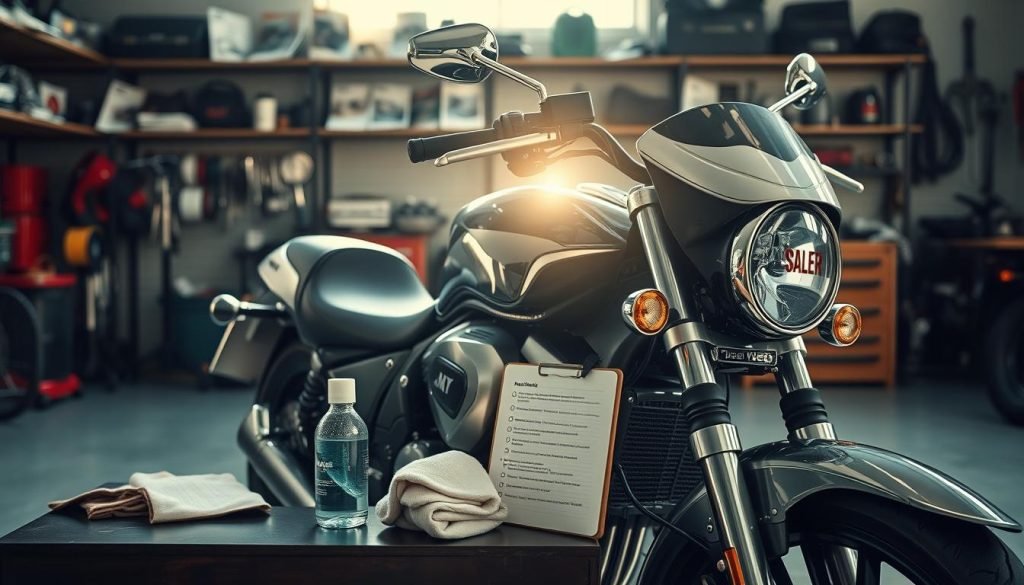
Before selling your motorcycle, getting it detailed can really boost its value. A clean bike looks better and might sell for more.
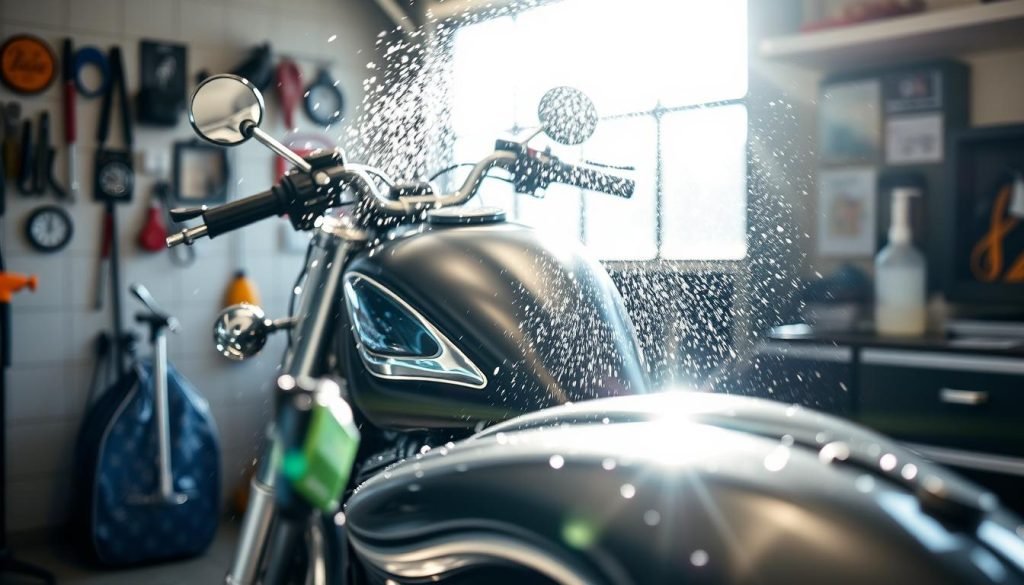
Good motorcycle cleaning tips are more than just a quick wash. You need a detailed plan to show off your bike’s best sides.
Washing the Exterior
Begin by washing the outside of your motorcycle. Use cleaners made for bikes to avoid harming the surface. How you wash is as important as what you use.
- Use lukewarm water and gentle motorcycle cleaner
- Work from bottom to top to prevent dirt redepositing
- Use microfibre cloths to avoid scratching
Polishing Chrome and Plastic
Chrome and plastic parts need special care. Use the right polish to make them shine and protect them from damage.
- Select metal polish for chrome surfaces
- Use plastic-specific cleaners for non-metal parts
- Apply protective coating after cleaning
Cleaning the Seats and Upholstery
Your motorcycle’s seats are key to its look. Clean and condition leather or vinyl to stop it from cracking and keep it looking new.
“A well-maintained seat can make the difference between a potential buyer walking away or making an offer.”
- Use leather-specific cleaners for leather seats
- Apply conditioner to prevent future wear
- Repair minor tears or damaged areas
Professional detailing is worth the investment for a better selling price. Take your time, use quality products, and focus on every detail.
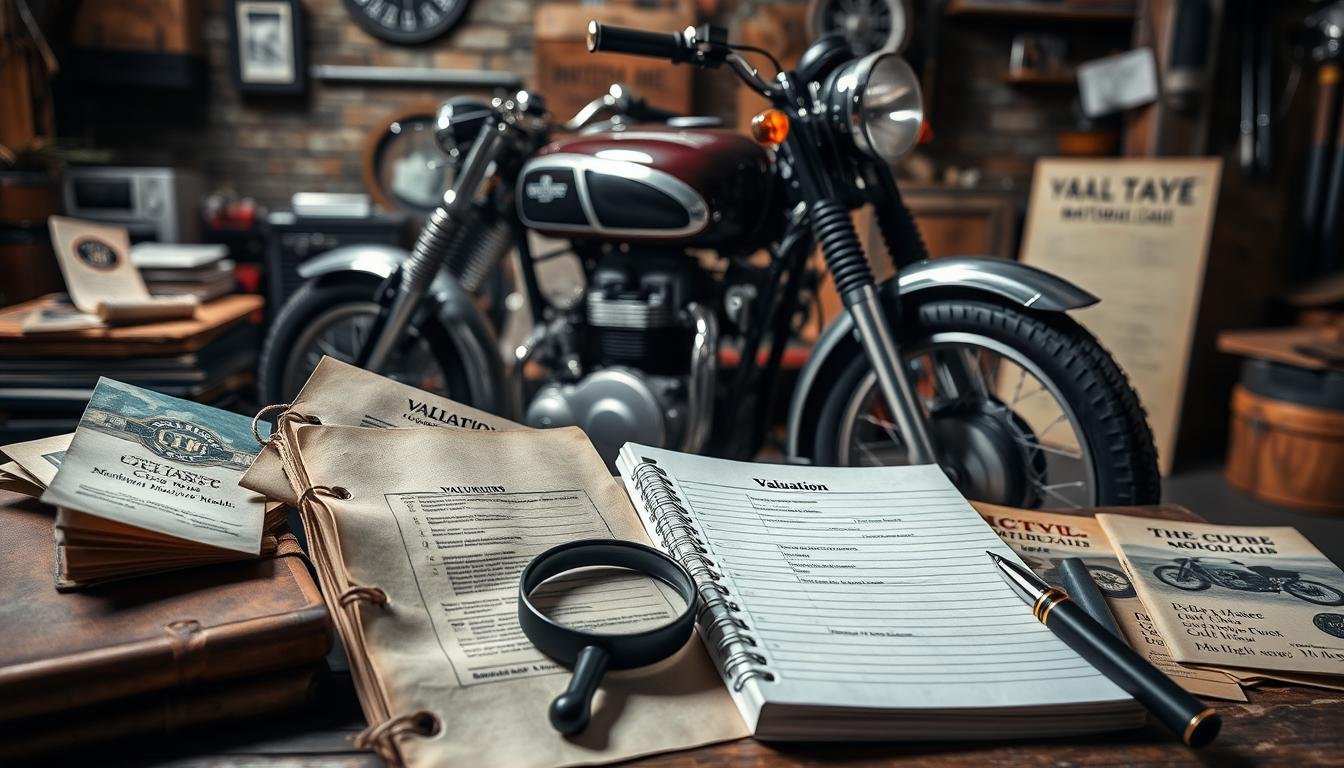
Gathering Important Paperwork
When selling your motorcycle, having the right paperwork is key. It helps build trust with buyers and makes the transfer process easier. Organizing your documents makes the sale smoother and more professional.
Before you list your motorcycle, gather these important documents. They ensure a clear and efficient sale:
Title and Registration
The motorcycle title proves you own it. Make sure it’s clean and free of any loans or liens. If you can’t find the original title, get in touch with your local DMV for a duplicate.
- Verify the title matches your current details
- Check for any transfer restrictions
- Prepare to sign the title over to the new owner
Service History and Receipts
Service records show your motorcycle’s maintenance history. Buyers like to see detailed records of servicing and repairs.
- Collect all maintenance receipts
- Include dealer service records
- Document any major repairs or upgrades
“A well-documented motorcycle tells a story of care and reliability” – Motorcycle Sales Expert
Manufacturer’s Manuals
Original manufacturer’s manuals add value to your sale. They give insights into the motorcycle’s specs and original equipment.
- Locate the original owner’s manual
- Include warranty information if applicable
- Gather any additional technical documentation
By carefully preparing your motorcycle documentation, you’ll gain buyer trust. This makes the ownership transfer process smoother.
Making Necessary Repairs
Getting your motorcycle ready for sale means paying close attention to both its mechanics and looks. Buyers will check every detail, so making sure your bike is in top shape is key to selling it well.
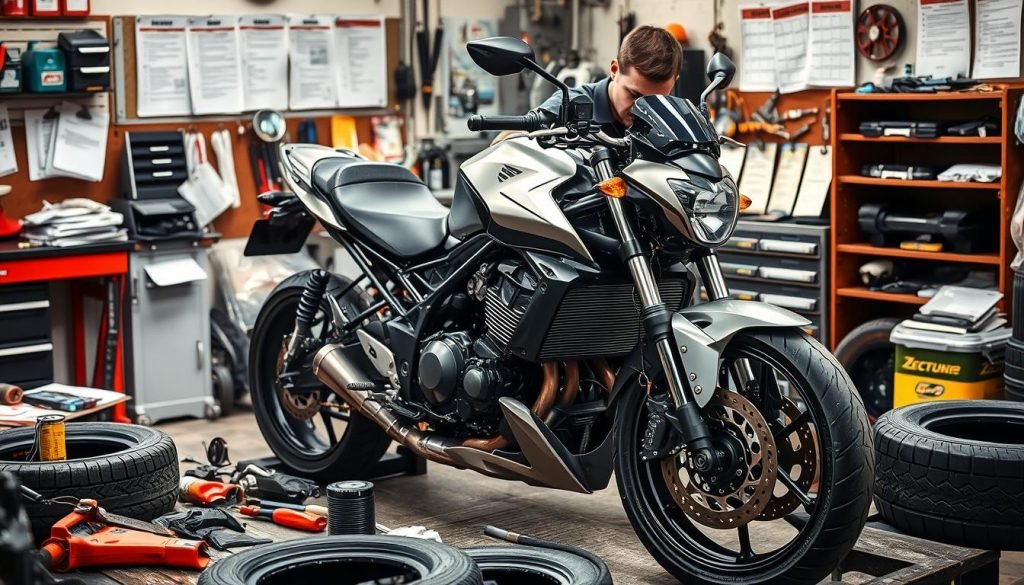
Before you list your motorcycle, check it over carefully. Fixing any mechanical or cosmetic problems can really help your bike’s value. It will also draw in more serious buyers.
Addressing Mechanical Issues
Fixing your motorcycle’s mechanical parts is vital. It makes your bike look well-kept and safe to ride. Here are some important things to focus on:
- Check and replace engine oil
- Inspect brake fluid and replace if older than two years
- Test and potentially replace the battery
- Clean or replace the engine air filter
- Examine brake pads and rotor condition
Fixing Cosmetic Damage
When selling a motorcycle, how it looks matters a lot. Here are some cosmetic fixes to consider:
- Repair minor scratches
- Touch up paint chips
- Polish chrome and metal surfaces
- Address scuff marks
Upgrading Essential Parts
Upgrading certain parts can increase your motorcycle’s value. Think about these upgrades:
| Upgrade Area | Potential Impact |
|---|---|
| Tires | Increases safety perception |
| Lighting | Enhances overall appearance |
| Chain and Sprockets | Demonstrates proper maintenance |
Remember, being open about your motorcycle’s condition builds trust with potential buyers.
Putting time into maintenance and repairs can really help sell your motorcycle. Buyers like a bike that shows it’s been well cared for. It shows the owner’s dedication to quality.
Setting a Competitive Price
Finding the right price for your motorcycle is key to drawing in buyers and getting a fair deal. You need to do your homework on the current market trends and pricing.
When pricing your motorcycle, there are a few important things to keep in mind. These can greatly affect your selling experience.
Researching Market Value
To price your motorcycle right, look at different sources:
- Check online platforms like Cycle Trader
- Review recent sales of similar models
- Use motorcycle pricing guides
- Think about local market conditions
Considering Additional Features
Unique features and extras can really boost your motorcycle’s value. Buyers like to see upgrades that improve performance or looks.
| Feature | Potential Value Increase |
|---|---|
| Performance Upgrades | 5-15% |
| Custom Paint | 3-10% |
| Aftermarket Accessories | 2-8% |
Evaluating Comparable Listings
Look at what’s for sale in your area to get a feel for prices. Spring and Summer are peak months for motorcycle sales, which can affect your pricing.
“The art of selling is knowing your market and pricing strategically”
Mileage is a big factor in how much your motorcycle is worth. Lower mileage usually means higher offers. But, well-kept bikes with service records can still get good prices, even with some miles.
Taking High-Quality Photos
Good motorcycle photos can really boost your sales. Listings with photos get 1.3X more views and 4.2X more clicks than those without.
Professional motorcycle photography is more than just snapping a photo. It’s an art that needs careful planning and skill to show off your bike’s best sides.
Choosing the Right Lighting
Natural daylight is the best for motorcycle photos. Try to shoot during:
- Golden hour (early morning or late afternoon)
- Overcast days for soft, even light
- Places with soft shadows and little harsh glare
Capturing Different Angles
Buyers want to see your motorcycle from all sides. Take photos from:
- Front three-quarter view
- Rear three-quarter view
- Side profile
- Close-up of unique features
- Detailed shots of mechanical parts
Highlighting Key Features
Your ad should highlight what makes your motorcycle special. Focus on:
- Custom modifications
- Pristine mechanical condition
- Exceptional maintenance records
- Original accessories
“A picture speaks a thousand words – in motorcycle sales”
High-quality photos can make your ad 5.4X more popular. This makes your motorcycle more appealing to buyers.
Crafting a Compelling Listing
Selling your motorcycle is more than just posting an ad. A well-made listing can speed up the sale. Your ad should grab attention and give all the details to build trust.
To sell your motorcycle well, focus on a few key points. These will make your listing stand out to buyers.
Writing an Honest Description
Being open is key when you describe your motorcycle. Buyers like to know the truth. Share important facts like:
- Total mileage (e.g., 7,200 miles)
- Mechanical condition
- Any modifications or upgrades
- Why you’re selling
Highlighting Unique Selling Points
Make your bike stand out by pointing out its best features. Show off:
- Low mileage
- Recent performance boosts
- Unique accessories
- Great maintenance history
Including Technical Specifications
| Specification | Details |
|---|---|
| Engine Type | Specify make and model |
| Year | Exact manufacturing year |
| Price | $6,500 (competitive market pricing) |
| Transmission | Manual/Automatic specifications |
“A picture is worth a thousand words, in motorcycle selling tips.” – Australian Motorcycle Traders Association
High-quality photos and a clear, honest description are key. They help attract serious buyers and make the sale smooth.
Advertising Your Motorcycle
When selling your motorcycle, the right advertising can make a big difference. Using the best motorcycle selling platforms and marketing strategies helps you find the right buyers. This way, you can sell your motorcycle successfully.
Selecting the Right Platforms
Picking the right places to advertise your motorcycle is key. Here are some top choices:
- Bikesales.com.au – Australia’s leading motorcycle marketplace
- Gumtree – Popular classified advertising website
- Facebook Marketplace – Extensive local reach
- Specific motorcycle trading websites

Utilizing Social Media
Social media is a powerful tool for advertising your motorcycle. Instagram and Facebook groups for motorcycle lovers can help you reach more people.
| Platform | Audience Reach | Engagement Potential |
|---|---|---|
| High | Excellent | |
| Moderate to High | Very Good | |
| Motorcycle Forums | Targeted | High |
Engaging in Motorcycle Forums
Motorcycle forums offer targeted exposure for your sale. They connect you with enthusiasts who might really want your motorcycle.
*91% of motorcycle sales advertisements benefit from high-quality, detailed images and comprehensive descriptions.*
Successful motorcycle advertising involves:
- Use clear, well-lit photographs
- Write detailed, honest descriptions
- Highlight unique features
- Be responsive to inquiries
Remember, effective motorcycle selling platforms are about quality presentation and targeted marketing. Your goal is to create an ad that builds trust and attracts real buyers.
Preparing for the Showings
Selling a motorcycle needs careful planning and smart preparation. Making the right setting for potential buyers can really help your sale. It’s all about motorcycle selling safety and smooth test rides.
Getting ready for test rides involves important steps for safety. It’s about being open and structured. This can make buyers feel more confident and speed up the sale.
Scheduling Convenient Times
Being flexible with viewing times is key. Here are some tips for good scheduling:
- Offer many time slots during the day
- Give enough time for detailed checks
- Have all needed documents ready
- Choose safe, well-lit places for meetings
Setting Up a Safe Viewing Area
It’s crucial to make a safe space for test rides. Follow these safety tips:
- Find a big, flat area with little traffic
- Ask for a valid motorcycle licence and insurance
- Have a detailed inspection list ready
- Be there with buyers during test rides
“Preparation turns a possible deal into a sure sale.”
To sell well, gather all important info about your motorcycle. Make a detailed summary that includes:
| Category | Details to Prepare |
|---|---|
| Mechanical History | Service records, maintenance logs |
| Ownership | Clear title, registration documents |
| Condition | Recent inspections, repair records |
By using these tips, you’ll make a professional and trustworthy space. This will attract serious buyers and make test rides smooth.
Finalising the Sale
When you’re ready to sell your motorcycle, knowing how to negotiate is key. Being prepared will give you confidence in the final stages. Decide on a minimum price you’re willing to accept and be ready to negotiate within 10-20% of that.
Transferring ownership of your motorcycle needs careful legal attention. Make sure all documents are in order before you sell. Use a secure payment method like a bank cheque or cash. Meet in a public place during the day for safety.
Always put safety first when selling your motorcycle. Ask to see the buyer’s driver’s licence and insurance before test rides. Screen buyers well to avoid scams. This way, you’ll have a smooth and safe sale for both you and the buyer.
Negotiating the Price
Start negotiations by knowing your motorcycle’s value. Use sites like Anibis, Tutti, and Facebook Marketplace to set a fair price. Be firm but open to good offers, knowing your minimum price.
Completing the Transaction
Finish the sale with a detailed bill of sale. Include all important details and have both parties sign it. Keep a copy for yourself. Also, check with your local transport authority for any legal steps you need to take.
Transferring Ownership Smoothly
Do all the paperwork needed to transfer ownership. This includes title transfer and liability release forms. Also, tell your insurance company about the sale and cancel your policy. By following these steps, you’ll have a professional and safe sale.